 Jen HoldenLicense ID:639966
- +1(443) 803-7620 jen@thejenholdengroup.com
Securing Funds in 2026: Homebuyer Assistance Programs in Annapolis, MD

The median home price in Annapolis, MD sits around $625,000 this spring. For many buyers looking to enter the market in 2026, coming up with a standard down payment feels like a steep financial climb. Fortunately, state and local governments offer financial tools to help cover down payments and closing costs.
These funds are not just for low-income earners. Many programs target middle-class buyers who have steady jobs but lack the cash reserves to close on a property. Understanding which programs apply to your situation can save you tens of thousands of dollars at the closing table.
Current Prices in the Annapolis Real Estate Market
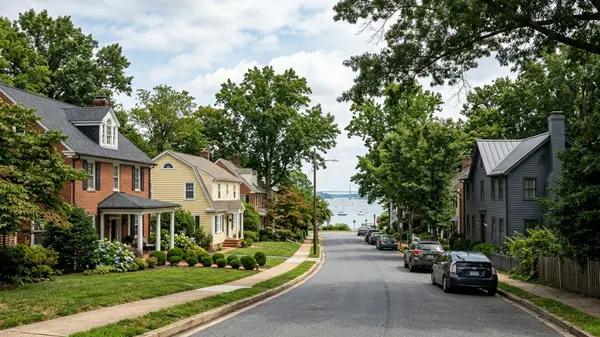
Buyers shopping in Annapolis, MD today will find a mix of historic rowhomes downtown and single-family detached houses further out. Prices rose steadily through last year, pushing the current median price tag past the $625,000 mark. Townhomes in planned communities often start in the mid-$400,000s, offering a more accessible entry point for new buyers.
Property taxes and homeowner association dues also impact your monthly carrying costs. Anne Arundel County assesses property taxes around $0.93 per $100 of assessed value, while city residents pay an additional municipal rate. Buyers should factor these numbers into their budget alongside standard mortgage payments.
Inventory remains tight near major commuter routes like Route 50 and I-97. Homes priced under $500,000 tend to attract multiple offers within days of hitting the market. You need your financing lined up before you start touring properties.
Many buyers find that expanding their search just outside the immediate downtown area yields better options. Neighborhoods along the Annapolis Neck peninsula offer diverse housing styles at slightly lower price points. Securing local assistance can make these areas much more affordable.
Covering Down Payments Versus Closing Costs
Buyers often confuse down payments with closing costs, but they represent two separate financial hurdles. A down payment is your initial equity stake in the property, usually ranging from three to twenty percent of the purchase price. Closing costs cover the administrative fees, title insurance, and local transfer taxes required to execute the transaction.
State and local programs in Maryland generally allow you to use assistance funds for either expense. If your loan requires a minimum three percent down payment, you can apply county funds to meet that requirement. Any leftover money can then be applied to your title and lender fees.
Maryland charges state and county transfer taxes when a property changes hands. First-time buyers receive a discount on the state portion of this tax, lowering the overall cash needed at the settlement table. Using government assistance to cover the remaining taxes keeps more cash in your emergency fund.
State-Level Funding: The Maryland Mortgage Program
The Maryland Department of Housing and Community Development runs the Maryland Mortgage Program, commonly known as MMP. This state-wide initiative pairs a standard 30-year fixed-rate mortgage with secondary loans to cover closing costs and down payments. The program works with both Federal Housing Administration loans and conventional mortgages.
Interest rates for MMP loans are set by the state and change regularly based on bond markets. Because the state acts as the ultimate backer, you must work with an approved lender to originate the loan. These lenders know the specific paperwork required to get state funds cleared on time.
Government-backed loans like FHA or VA options often pair well with state funds. A conventional loan through the MMP might require a slightly higher credit score but allows you to drop mortgage insurance sooner. Your loan officer will help you compare both routes.
1st Time Advantage Direct
The 1st Time Advantage Direct loan provides competitive interest rates for buyers who have not owned a home in the past three years. This option offers the lowest base mortgage rate in the state's portfolio. It does not include direct down payment funds, making it best for buyers who already have cash saved but want lower monthly payments.
Buyers who need cash at closing can look at the 1st Time Advantage 5000 or 4% options. These variations provide either a flat $5,000 or 4 percent of the first mortgage amount as a zero-percent deferred loan. You pay this secondary loan back when you sell the house or refinance.
SmartBuy 3.0 for Student Debt
Maryland offers a specialized program called SmartBuy 3.0 to help buyers saddled with student loans. To qualify, you must have an existing student debt balance of at least $1,000. The program provides up to 15 percent of the home's purchase price to pay off your outstanding student loans entirely at closing.
The student debt must be paid in full for the transaction to work. If 15 percent of the purchase price is not enough to clear your balance, you must bring the difference to the table. This tool helps buyers improve their debt-to-income ratio immediately upon buying a home.
Flex Loans for Repeat Buyers
You do not always have to be a first-time buyer to get state help. The MMP Flex loan products cater to repeat buyers who are selling their current house and buying another. These loans offer down payment assistance in the form of a deferred loan or a grant.
Flex loans typically carry a slightly higher interest rate than the 1st Time Advantage products. However, the immediate cash assistance can make it easier to transition between properties without draining your savings.
County Funding: Arundel Community Development Services
Anne Arundel County offers its own financial help through Arundel Community Development Services, or ACDS. Their Mortgage Assistance Program provides up to $50,000 for buyers purchasing a home within the county limits, including Annapolis. This money comes as a deferred loan with zero percent interest.
The ACDS funds do not require monthly payments. The loan sits silently against the property and only becomes due when the home is sold, transferred, or refinanced. Buyers must meet specific guidelines to secure this county-level funding:
-
Income Limits: Your household income cannot exceed 100 percent of the Area Median Income. For 2026, this caps out around $91,188 for a single individual and $130,250 for a family of four.
-
Homeownership Counseling: Applicants must complete a HUD-approved homebuyer education course before signing a real estate contract.
-
Cash Contribution: Buyers must put at least one percent of their own money toward the purchase.
-
Primary Residence: The property must be used as your primary residence.
The county program can be layered with state funds in certain situations. Combining ACDS money with an MMP loan can dramatically reduce the cash needed to close on a house.
Local Help Inside the City of Annapolis
Buyers purchasing a home specifically within the incorporated limits of Annapolis, MD have access to municipal funds. The city runs the MPDU Settlement Expense Assistance Program to help moderate-income earners buy homes. This program provides up to $10,000 to cover closing costs and down payments.
Like the county program, the city provides these funds as a zero-percent interest deferred loan. You do not make payments on this $10,000 while you live in the home. The balance is repaid when you eventually sell or refinance the property.
To use the city funds, the home must be your primary residence. You must also contribute at least one percent of the purchase price from your own savings. This ensures the buyer has some personal financial stake in the transaction.
Who Qualifies for These Assistance Programs
State, county, and city programs look at three main factors: your income, your credit history, and the property itself. First-time buyers generally get the most favorable terms. Under state guidelines, a first-time homebuyer is anyone who has not owned a primary residence in the past three years.
Your credit score dictates which loans you can use. The Maryland Mortgage Program requires a minimum credit score of 640 for most conventional and FHA loans. If your score falls below that line, you will need to spend time repairing your credit before applying for state or county funds.
Location also plays a role in approval. The property must be located in Maryland, and local programs require the home to be within their specific jurisdictions. Buyers targeting neighborhoods near Route 50 and I-97 should verify whether the house falls inside the Annapolis city limits or just within Anne Arundel County, as this determines which local funds apply.
How to Apply for Local and State Funds
The application process starts with your lender, not the government. State and local housing departments do not originate mortgages directly to the public. You need to find a loan officer who is officially approved to underwrite Maryland Mortgage Program loans.
Once you select an approved lender, they will review your financial documents to determine your eligibility. You will need to provide recent pay stubs, two years of tax returns, and bank statements. Your lender will calculate your debt-to-income ratio and verify your household size against the 2026 income limits.
Adding government assistance to a mortgage application does extend the underwriting timeline. The state or county housing department has to review the file after your primary lender approves it. Buyers should plan for a 30 to 45-day closing window when writing an offer.
Before you start touring homes, you must complete the required homebuyer education course. Both the state and county programs mandate this step. Getting your certificate early prevents delays when you finally find a house and submit an offer.
Frequently Asked Questions
What is the Anne Arundel County Mortgage Assistance Program (MAP)?
MAP is a local initiative providing up to $50,000 in deferred loans to help buyers purchase property in Anne Arundel County. The funds carry zero interest and do not require monthly payments while you live in the house. You repay the balance out of the proceeds when you sell or refinance the property.
What credit score is needed for homebuyer assistance in Maryland?
Most state-backed programs require a minimum credit score of 640. Some specific loan products or lenders may require a 660 or 680 to secure the best interest rates. If your score is lower, working with a credit counselor can help you reach the threshold before applying.
Is there a grant for first-time homebuyers in Maryland?
Yes, the state does offer some true grants that never have to be repaid, though they are less common than deferred loans. For example, certain MMP Flex products provide a small outright grant. Local programs typically structure their larger funds as loans that sit silently against your deed.
Categories
Recent Posts