 Jen HoldenLicense ID:639966
- +1(443) 803-7620 jen@thejenholdengroup.com
What’s Your Interior Design Style? 8 Home Aesthetics and What They Say About You
What’s Your Interior Design Style?
You do not need to know the official name of your aesthetic to know how you want a room to feel. Maybe you want light but not cold. Classic but not formal. Cozy without the clutter. Once you can name the feeling, decorating, renovating, staging, and even house hunting get a whole lot easier.
Most people describe the feeling before they describe the furniture.
A design style gives you a shared language. It helps you explain why one room feels easy and another one feels a little off, even when you cannot put your finger on exactly what is wrong.
It can also keep a project from going sideways. Instead of buying one pretty thing at a time and hoping it all works together, you have a loose filter for choosing furniture, paint, lighting, flooring, textiles, and art.
The goal is not to lock yourself into a label. Very few homes fit neatly into one box. The goal is to notice what you keep coming back to and use that as a starting point.
“I want it to feel light, but not cold.”
“I like classic, but not too formal.”
“I want cozy, but I still need to breathe.”
“I love color, but I do not want chaos.”
Style affects more than what you put on the walls.
The way a home feels can shape how quickly a buyer connects with it, how confidently an owner renovates, and how clearly a seller prepares a property for the market.
When you are buying
Knowing your style helps you look past someone else’s furniture and see the bones of the home. Natural light, ceiling height, millwork, flooring, and flow matter more than the current sofa.
When you are renovating
A clear aesthetic keeps the choices connected. It gives you a way to evaluate finishes instead of chasing every new trend that crosses your screen.
When you are selling
Good staging does not erase a home’s personality. It edits the space so buyers can understand it, move through it, and imagine making it their own.
Which one feels most like you?
Start with the room you are naturally drawn to, then look at the materials, colors, and shapes doing the work. You may find that you are one clear style, or a mix of two or three.
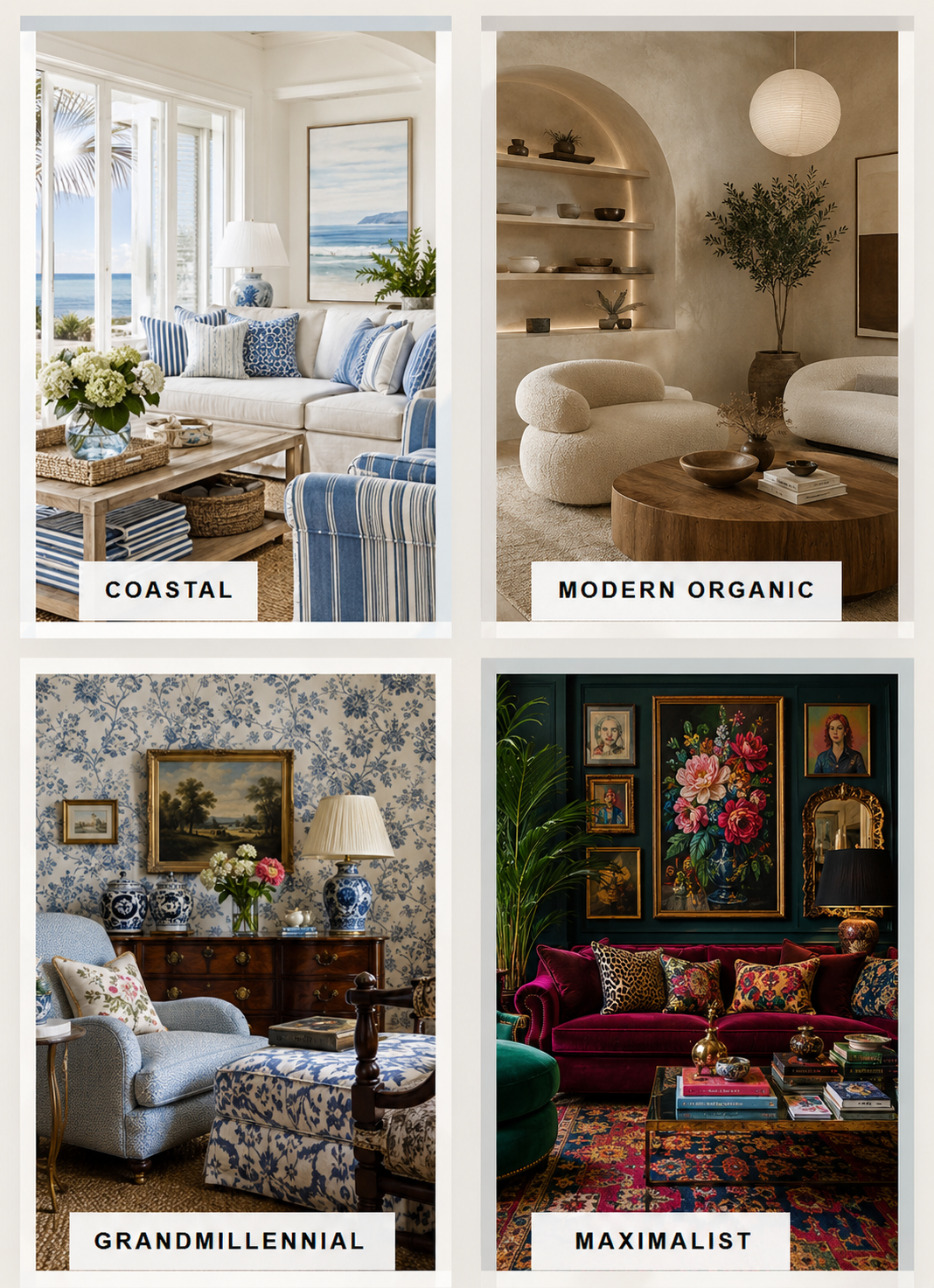
Coastal
Wants morning coffee near a window and probably owns too many striped pillows.
Coastal design is less about seashells and anchors and more about what it feels like to be near the water. The rooms are bright, soft, easy, and unfussy. Pale walls, relaxed upholstery, weathered wood, woven fibers, and washed blues create a home that feels like a deep breath.
Look for
- White, cream, or pale painted walls
- Slipcovered sofas and relaxed linen
- Jute, sisal, seagrass, and woven baskets
- Blue and white stripes used with restraint
- Weathered woods and light-filtering drapery
Keep it current
- Choose texture over themed beach decor
- Use navy as an accent, not the whole room
- Mix warmer woods into all the white
- Let natural light do most of the work
A signature coastal palette
Modern Organic
Wants everything calm, warm, textured, and beige, but in a very expensive way.
Modern Organic takes the clean shape and restraint of contemporary design and softens it with natural materials. The look is sculptural without feeling cold. Curved furniture, plaster-like walls, warm woods, stone, oversized ceramics, linen, and woven texture keep the room quiet but far from flat.
Look for
- Warm white, putty, oat, and clay tones
- Rounded sofas and sculptural silhouettes
- Oak, walnut, travertine, and textured stone
- Bouclé, linen, wool, and natural upholstery
- Large branches, pottery, and handmade objects
Keep it current
- Use contrast so the room does not disappear into beige
- Mix smooth and rough finishes
- Choose fewer pieces, but give them more presence
- Add black or deep brown in small doses
A signature modern organic palette
Grandmillennial
Has strong feelings about lampshades, wallpaper, and inherited furniture.
Grandmillennial style takes the traditional details many people grew up around and makes them feel fresh again. Floral fabric, pleated shades, blue and white china, skirted tables, rattan, antique wood pieces, and wallpaper all belong here. The room should feel collected over time, not ordered as a matching set.
Look for
- Floral, block-print, and small-scale patterned fabrics
- Wallpaper with botanical or classic motifs
- Blue and white ceramics and ginger jars
- Scalloped edges, pleated shades, and trim
- Antiques mixed with comfortable upholstered pieces
Keep it current
- Leave some walls and surfaces quiet
- Repeat two or three colors throughout the room
- Use older pieces without making the room feel precious
- Balance pattern with crisp white or natural linen
A signature grandmillennial palette
Heritage
Would like a fireplace, a library, and a golden retriever immediately.
Sometimes called Ralph Lauren-inspired or heritage luxury, this style leans into the feeling of an old library, country house, or sailing club. Leather, plaid, dark wood, brass, framed landscapes, equestrian references, and stacks of books give the room weight and history.
Look for
- Tufted leather and classic club chairs
- Tartan, plaid, herringbone, and wool
- Mahogany, walnut, and richly stained oak
- Brass lamps, nailheads, and picture lights
- Built-in shelving and framed sporting art
Keep it current
- Bring in cream upholstery to break up the dark tones
- Use warm lighting at several heights
- Mix polished pieces with relaxed linen
- Let one plaid do the talking
A signature heritage palette
Japandi
Cannot relax if there are too many things on the counter.
Japandi brings Japanese restraint together with Scandinavian warmth. It is minimal, but it does not feel stark. Low furniture, warm woods, handmade ceramics, linen, paper lighting, and open space give every object room to breathe.
Look for
- Low-profile furniture and simple shapes
- Warm wood with deep black accents
- Handmade ceramics and stoneware
- Paper lanterns and diffused lighting
- Linen, raw silk, and a single branch or stem
Keep it current
- Hide everyday clutter before buying more decor
- Choose imperfect handmade pieces
- Prioritize touch and texture over ornament
- Leave open space on purpose
A signature Japandi palette
Maximalist
Says “just one more piece of art” and means seven.
Maximalism is not random clutter. At its best, it is a room full of things someone genuinely loves, connected by color, repetition, and confidence. Saturated walls, layered patterns, gallery displays, velvet, brass, books, art, and collections all get invited.
Look for
- Deep green, wine, sapphire, and jewel-toned walls
- Gallery walls and collected art
- Mixed florals, stripes, and geometric patterns
- Velvet, silk, lacquer, brass, and shine
- Books, ceramics, and collections shown proudly
Keep it current
- Repeat a few colors so the room still feels connected
- Leave walking paths and practical surfaces clear
- Group collections instead of scattering them everywhere
- Give the eye one quiet place to land
A signature maximalist palette
Modern Farmhouse
Still loves a black-framed window and is not sorry about it.
Modern Farmhouse mixes the comfort of country living with cleaner lines and simpler finishes. Exposed wood, white walls, black metal, apron-front sinks, generous tables, and practical furniture make the home feel welcoming without looking overly decorated.
Look for
- Exposed beams and warm reclaimed wood
- Black hardware, lighting, and window frames
- Apron-front sinks and practical kitchens
- Simple upholstered furniture in warm neutrals
- Stone, baskets, pottery, and loose greenery
Keep it current
- Use shiplap sparingly
- Skip signs and overly literal farmhouse decor
- Balance rustic wood with cleaner furniture
- Choose warmer whites instead of stark gray
A signature modern farmhouse palette
Transitional
Wants timeless, polished, and comfortable, with no weird surprises.
Transitional design sits right between traditional and contemporary. It keeps the comfort, millwork, and familiar proportions of classic interiors, then removes the fuss. Neutral upholstery, cleaner lines, layered texture, restrained pattern, and a mix of old and new make it one of the easiest styles to live with.
Look for
- Cream, taupe, mushroom, and soft gray
- Clean-lined upholstery in solid fabrics
- Traditional millwork with modern lighting
- One or two antiques mixed with newer pieces
- Abstract art in classic frames
Keep it current
- Add texture so the neutral palette does not feel flat
- Avoid matching every table and chair
- Use pattern in smaller, quieter doses
- Mix brushed brass with darker accents
A signature transitional palette
Still deciding? Start here.
| Style | Overall feeling | Materials | Color direction | You may love it if... |
|---|---|---|---|---|
| Coastal | Light and relaxed | Linen, jute, pale wood | White, sand, washed blue | You want the room to feel like a summer morning. |
| Modern Organic | Calm and sculptural | Stone, oak, plaster, wool | Oat, clay, cocoa, warm white | You like clean spaces but hate anything cold. |
| Grandmillennial | Collected and charming | Chintz, rattan, porcelain | Blue, cream, rose, green | You think a pleated lampshade makes everything better. |
| Heritage | Rich and tailored | Leather, tartan, dark wood | Navy, burgundy, saddle, brass | You would happily live in a library. |
| Japandi | Quiet and uncluttered | Wood, paper, linen, ceramic | Rice, oat, tea, ink | A clear counter actually lowers your blood pressure. |
| Maximalist | Bold and expressive | Velvet, art, brass, pattern | Jewel tones and saturated color | Your favorite rooms give you more to look at. |
| Modern Farmhouse | Warm and familiar | Wood, iron, stone, cotton | Warm white, wheat, black | You want comfortable rooms that can handle real life. |
| Transitional | Polished and livable | Linen, wood, nickel, brass | Cream, taupe, mushroom, espresso | You want classic without the formality. |
Your home does not need to pass a style test.
The most interesting homes rarely fit one category perfectly. You might love the lightness of Coastal, the shapes of Modern Organic, and the blue-and-white details of Grandmillennial.
That is not a problem. It is usually where the room starts to feel personal. The key is giving one style the lead and letting the others show up in smaller ways.
A simple 70 / 20 / 10 formula
Staging is not about turning your house into somebody else’s.
One of the most important things we do for sellers is help them understand how to use what they already own to present the home in its best light.
Sometimes that means moving a sofa, editing a bookcase, changing the bedding, or giving an inherited piece more room around it. Other times, the home needs professional staging, rental furniture, updated lighting, paint guidance, or a more complete pre-market plan.
We work hand in hand with professional stagers to create rooms buyers can understand quickly and imagine living in. The level of support depends on the home and the seller. It should feel helpful, not overwhelming.
Your partners in all things home.
Whether you are searching for the right home, settling into a new neighborhood, deciding what to update, or preparing to sell, we bring local insight, market experience, and a sharp eye for how a home lives and feels.
The Jen Holden Group of Compass
443.803.7620 (m) | 410.429.7425 (o)
jen.holden@compass.com | @thejenholdengroup
Categories
Recent Posts