 Jen HoldenLicense ID:639966
- +1(443) 803-7620 jen@thejenholdengroup.com
Figuring Out How Much House You Can Afford in Annapolis, MD (2026 Guide)
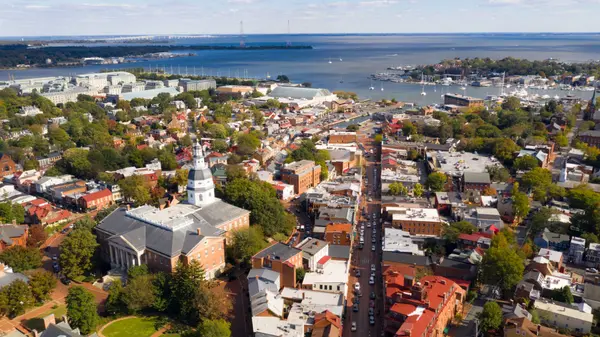
The median sale price in Annapolis, MD sits around $618,000 as of mid-2026, and homes are spending roughly 28 days on the market. With about 144 available homes in active inventory, this is not a market where you want to be guessing at your price range when you walk through a door. This is especially true for first-time home buyers in Annapolis, MD. Know your numbers before you schedule a showing.
And your numbers are more than just the listing price. Lenders are looking at your income, your existing debts, and the specific carrying costs tied to where you're buying - not a national average. Getting those local figures right is what keeps your search focused on homes you can actually close on.
What It Costs to Buy a Home in Annapolis Right Now
You'll see broad estimates place local home values anywhere between $595,000 and $675,000, but recent market data puts the firm median sale price at $618,000. Properties here move fast - often in under a month - so there's not much time to sort out your finances once you've found the right place.
That $618,000 median sets the floor for your down payment math. On top of that, Maryland closing costs generally run between 2% and 5% of the purchase price. On a $618,000 home, you're looking at roughly $12,360 to $30,900 just to get the keys - before you've bought a single piece of furniture.
How Lenders Calculate Your Purchasing Power
Lenders use your Debt-to-Income (DTI) ratio to decide the maximum loan amount you qualify for. It's straightforward: they compare what you earn before taxes each month to what you owe your creditors each month. Most conventional lenders want that total DTI below 36% to 43%, though certain loan programs allow higher limits. The less debt you're carrying relative to your income, the more house you can borrow for.
The 28/36 Rule
The 28/36 rule is the baseline most financial professionals use when sizing up a housing budget. The idea is that no more than 28% of your gross monthly income should go toward housing expenses, and no more than 36% should go toward total debt obligations.
Housing expenses in that 28% calculation include your mortgage principal, interest, property taxes, and insurance - not just the loan payment. Staying close to those thresholds is what keeps the rest of your monthly budget intact for everything else.
Adding Up Your Monthly Income
Gross monthly income is what you earn before taxes and deductions come out. Lenders look at base salary, hourly wages, consistent bonuses, and any other reliable income sources you can document. You'll need recent pay stubs and two years of tax returns to back it up. If you're self-employed, expect to also provide business tax documents and profit-and-loss statements.
Adding Up Your Current Debts
The debts that count against your DTI are student loans, car payments, minimum credit card payments, and personal loans - specifically the minimum monthly payment your creditors require, not the total balance you owe. Phone bills, groceries, and streaming subscriptions don't factor in. Paying off a car loan or a credit card before you apply is one of the more straightforward ways to lower your DTI and push your housing budget higher.
Factoring in Local Taxes and Insurance
Your mortgage payment isn't just principal and interest. Property taxes and homeowners insurance get rolled into the monthly payment through an escrow account, and those local rates matter more than most online calculators acknowledge. Get them wrong and your affordability estimate can be off by hundreds of dollars a month.
Local Property Taxes
For the 2026 fiscal year, the Anne Arundel County property tax rate is $0.977 per $100 of assessed value. Add the Maryland state property tax of $0.112 and you're at a combined rate of $1.089 per $100 for properties outside city limits.
Buy inside the City of Annapolis, though, and an additional municipal rate applies - pushing the combined rate to $1.433 per $100 of assessed value. That difference adds up to a meaningfully higher monthly tax bill than a similarly priced home just outside city limits.
Maryland Homeowners Insurance
A standard homeowners insurance policy in Maryland generally runs between $1,900 and $2,400 per year. The premium varies based on the home's age, location, and the dwelling coverage amount you choose. Properties near the water may also require separate flood insurance, which a standard policy doesn't cover. Get an insurance quote early - don't leave it as a line-item placeholder.
HOA Fees and Upkeep
A number of Annapolis neighborhoods and condo complexes carry Homeowners Association fees, covering community maintenance, amenities, and sometimes exterior building repairs. Lenders include those dues in your DTI calculation because they're a required ongoing expense. A $300 monthly HOA fee directly reduces the mortgage amount you qualify for compared to a property with no association dues.
Down Payments and Buyer Assistance Programs
The cash you bring to closing has a direct effect on how much house you can afford. A larger down payment means a smaller loan, a lower monthly payment, and often a better interest rate. Twenty percent down is the traditional benchmark, but plenty of buyers close with far less. There are several loan types and local programs worth knowing about before you assume you need to come up with a large lump sum.
Down Payment Expectations
Conventional loans often require as little as 3% to 5% down for qualified buyers. FHA loans, backed by the federal government, require 3.5% down and are common among buyers with lower credit scores. Veterans and active-duty military may qualify for VA loans, which offer a 0% down payment option. On a median-priced $618,000 Annapolis home, a 5% down payment works out to $30,900.
Private Mortgage Insurance
Put less than 20% down on a conventional loan and your lender will require Private Mortgage Insurance (PMI). It's a monthly fee that protects the lender if you default - not you - and it gets added on top of your regular mortgage payment, which affects both your monthly budget and your DTI. Once you've built 20% equity in the home, you can generally request to have it removed.
First-Time Buyer Programs in Anne Arundel County
Two programs are worth looking into if you're buying for the first time. The Anne Arundel County Mortgage Assistance Program (MAP) offers deferred, 0% interest loans up to $50,000 for eligible first-time buyers. Those funds can go toward a down payment, closing costs, or a rate buydown, and they're repayable either when you sell the home or after 30 years. The Maryland Mortgage Program (MMP) provides statewide down payment assistance as well. Both programs typically require completing a homebuyer education course through Arundel Community Development Services before you can apply.
Getting Pre-Approved by a Local Lender
An online calculator gives you a ballpark. A pre-approval letter gives you an actual number - one based on your verified income, your real credit score, and the current Anne Arundel County tax rates. That distinction matters in a market where sellers expect to see a pre-approval letter with every purchase offer.
Local lenders also tend to have a sharper grasp of municipal tax differences and regional HOA structures than an out-of-state call center will. That familiarity means your estimated monthly payment is actually going to reflect what it costs to own in this specific area - not some averaged-out figure that doesn't account for whether you're inside or outside city limits.
Common Questions About Home Affordability in Annapolis
How much income do I need to buy an average-priced home in Annapolis right now?
It depends on your down payment, interest rate, and current debts. With the median sale price around $618,000, buyers typically need a six-figure household income to keep their total housing costs within the recommended 28% of their gross monthly pay.
How do Anne Arundel County property taxes and local HOA fees impact my maximum monthly housing budget?
They directly reduce your purchasing power. Lenders include the county's $1.089 per $100 tax rate - or $1.433 inside city limits - and any HOA dues in your DTI ratio, meaning higher taxes or fees lower the maximum loan amount you can get.
Do I need to factor in flood insurance when calculating how much house I can afford in Annapolis?
It depends on the specific property's location. Homes situated near the water or in designated flood zones require separate flood insurance, which adds to your monthly carrying costs since standard Maryland homeowners policies do not cover flood damage.
Are there Maryland first-time homebuyer programs that can increase my purchasing power in the Annapolis area?
Yes. The Anne Arundel County Mortgage Assistance Program provides up to $50,000 in deferred, 0% interest loans for down payments and closing costs, while the Maryland Mortgage Program offers statewide assistance for qualified buyers.
Does my budget go further in certain Annapolis zip codes compared to buying in downtown or Eastport?
Yes. Properties located outside the City of Annapolis limits avoid the additional municipal property tax, keeping the combined rate at $1.089 per $100 instead of $1.433. This lower tax burden leaves more room in your monthly budget for the mortgage principal and interest.
Should I rely on an online affordability calculator or get pre-approved by a local Annapolis mortgage lender first?
Get pre-approved by a local lender. Calculators offer a starting point, but a local lender uses your verified income, exact credit score, and accurate municipal tax rates to tell you exactly how much you can borrow.
Categories
Recent Posts