 Jen HoldenLicense ID:639966
- +1(443) 803-7620 jen@thejenholdengroup.com
Understanding Real Estate Commissions in Annapolis, MD for 2026
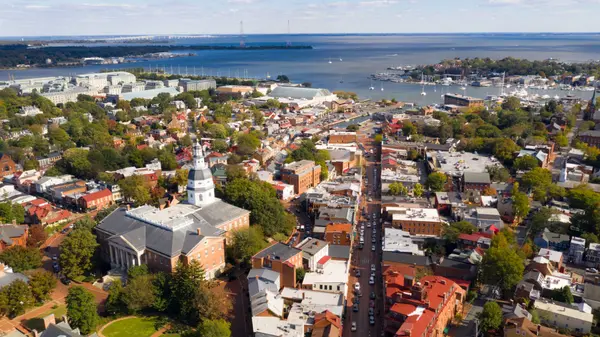
Homes in Annapolis move fast - properties spend roughly 28 days on the market before going under contract. With a median sale price around $618,000, anyone planning to sell a home in Annapolis knows there is real money on the line for both sides of any transaction.
Buyers and sellers both want to know how agent compensation fits into these numbers, and that's a fair question to ask early. The rules around broker fees have shifted recently, changing how compensation is advertised and negotiated across the state. Understanding your costs before you sign anything - whether you're buying or selling - means no surprises when you get to the closing table. The exact percentage you'll pay depends on the current market, the property, and the specific agreements you sign before touring or listing a home.
Average Realtor Fees in Maryland
The average total real estate commission in Maryland falls between 5.4% and 5.55% of the final sale price. That total doesn't go to one person - it's typically split between the agent representing the seller and the agent representing the buyer.
Each side generally receives roughly 2.6% to 2.8% of the transaction. Some sources cite a broader range of 5.5% to 6%, but the mid-fives are the most common baseline for full-service brokerages across the state.
These percentages are always negotiable and never set by law. Agents base their rates on the level of service they provide, their brokerage's pricing model, and what it actually takes to market your specific property.
What That Means for an Annapolis Sale Price
Applying the state average to local property values gives you a clearer sense of the dollar amounts involved. An Annapolis home selling at the $618,000 median sale price with a 5.5% total commission generates $33,990 in total agent fees. Split evenly, the listing brokerage and the buyer's brokerage each receive $16,995.
On a higher-end waterfront property selling for $1.2 million, that same percentage yields $66,000 in total commission. The percentage looks the same on paper; the dollar figure is a different conversation.
How Maryland Compares to National Averages
Maryland's commission rates align closely with the rest of the country - most states see average total fees hovering around that same 5.5% mark. Regional differences can emerge based on local housing inventory and state-specific regulations, but the basic structure of splitting a percentage of the sale price remains the dominant model nationwide.
Who Pays the Commission: Buyer or Seller?
Traditionally, the seller paid the entire commission out of their sale proceeds at closing. The listing agreement specified a total percentage, and the listing broker offered a portion of that to the brokerage that brought the buyer. That arrangement has changed.
Sellers still pay their listing agent, but they're no longer presumed to cover the buyer's agent fee automatically. Compensation is now negotiated separately on both sides of the transaction. Buyers and sellers each need to agree on who covers what before you get anywhere near closing.
How Seller-Paid Listing Fees Work
When you list a house, you sign an agreement detailing exactly what your listing agent will earn. That fee comes out of the money the buyer brings to the closing table - you don't pay it out of pocket before the home sells. If the property doesn't sell, you generally owe the listing agent nothing.
Buyer's Agent Compensation Under the New Rules
Buyers now sign a written representation agreement detailing their agent's fee before touring any homes. If the seller chooses not to offer a concession to cover this cost, the buyer is responsible for paying their agent directly.
Many sellers still choose to offer buyer-broker compensation to attract more offers. It can be structured as a seller concession written into the purchase offer - so the mechanics are different than they used to be, but the outcome is often similar.
Breaking Down the Commission Split
A 2.6% to 2.8% fee per side doesn't go straight into an individual agent's bank account. Real estate agents must hang their license with a brokerage, and that brokerage takes a cut of every closed transaction.
The split between the agent and their broker varies widely based on experience and office policies. A common arrangement is the 80/20 rule, where the agent keeps 80% of the commission and the broker takes 20%. Brokers use their share to cover office expenses, legal compliance, and marketing tools. The agent uses their portion to pay for their own business expenses, taxes, and licensing fees.
Brokerage Splits and the 80/20 Rule
Under an 80/20 split, an agent earning a $16,995 gross commission on a median Annapolis sale sends $3,399 to their broker and keeps $13,596 - before taxes and personal business expenses. Newer agents might start on a 60/40 or 70/30 split until they hit a certain sales volume. Top producers sometimes negotiate 90/10 splits or pay a flat monthly desk fee to keep 100% of their commissions.
Net Earnings on a Typical Annapolis Sale
Consider a $500,000 property sale where the buyer's agent earns a 2.5% commission - that's $12,500 gross. After a 20% broker split, the agent nets $10,000. From that $10,000, subtract gas, marketing materials, self-employment taxes, and association dues. The final take-home pay is significantly lower than the gross commission figure suggests. It's worth keeping that in mind when you're negotiating.
Recent Rule Changes for Maryland Real Estate
Following the August 17, 2024 NAR settlement, Maryland listing agents can no longer advertise buyer-agent compensation offers on the Bright MLS system. Offers of compensation must be communicated off the multiple listing service.
Every buyer must also sign a written buyer-representation agreement specifying compensation before touring any homes. Maryland was already ahead of many states on this - the state has required written buyer-agency agreements since 2016, and has recognized statutory buyer's agency since 1999. Local professionals are well-versed in representing buyer interests. The primary shift is how those buyer agents get paid and how that payment is negotiated.
Written Agreements for Buyers
You can't walk through a listing with an agent without first signing a document outlining their services and fees. That's not optional. The agreement specifies a set rate or dollar amount, and the agent cannot collect more than what's listed in that signed contract - so read it carefully before you tour anything.
Are Six Percent Fees Still Standard?
A flat 6% total fee is no longer the default expectation in Maryland. Some brokerages still charge this rate for premium services, but the average has settled closer to the 5.4% to 5.55% range. Sellers are increasingly scrutinizing fees and negotiating unbundled services. The total percentage depends entirely on what you agree to pay your listing agent and what the buyer agrees to pay their representative.
Negotiating Fees and Paying Less
Real estate commissions remain fully negotiable in Maryland. You can ask an agent to lower their rate - whether they do depends on the property and their business model.
An agent might accept a lower percentage if you're selling a higher-priced home, or if you agree to buy your next property through them. They may hold firm if the home requires extensive staging and marketing to sell. Getting listing presentations from multiple agents gives you a realistic sense of the going rates in your specific neighborhood. The lowest fee doesn't always produce the highest net profit - that's a real distinction worth understanding before you make a decision based on percentage alone.
Will an Agent Accept Two Percent?
Some listing agents will accept a 2% fee for their side of the transaction, especially on higher-priced homes. That only covers the listing side, though - the buyer's agent fee is negotiated separately. If a seller pays 2% to their listing agent and offers 2.5% to the buyer's agent, the total commission is 4.5%. Agents evaluating a 2% listing request will look at the home's condition and how quickly it's likely to sell.
Flat-Fee and Discount Brokerages in Maryland
Sellers looking to reduce costs can use flat-fee MLS services. These companies charge a set dollar amount to place your home on Bright MLS, leaving you to handle the showings, negotiations, and paperwork yourself. Discount brokerages offer a middle ground - basic representation for a lower percentage, such as 1% or 1.5% for the listing side. Before you go that route, verify exactly which services are excluded. The savings are real; so are the trade-offs.
Closing Costs Versus Agent Fees
Sellers in Maryland typically pay 3.3% to 3.8% of the sale price in closing costs - completely separate from agent commissions. On a $618,000 median sale, that's roughly $20,394 to $23,484 in additional expenses just to transfer the property. When you combine closing costs with a 5.5% commission, a seller might part with 8.8% to 9.3% of their sale price at the closing table. Budget for both sets of expenses, or your final settlement statement will be an unpleasant read.
Typical Seller Closing Costs in Maryland
The largest seller closing expenses are transfer and recordation taxes. Maryland charges a state transfer tax of about 0.5%, plus additional county-level taxes. Sellers also pay title fees, recording fees, and any prorated property taxes or HOA dues. If you have an outstanding mortgage, the remaining balance is paid off from the proceeds before you receive your funds.
Who Usually Pays the Rest of the Closing Costs
Buyers have their own set of closing costs, often ranging from 3% to 5% of the loan amount - mortgage origination fees, appraisal costs, title insurance. In some negotiations, a buyer might ask the seller to pay a portion of their closing costs. That's structured as a seller concession, and it reduces the seller's final net.
Broker Fees for Annapolis Rentals
Finding a long-term rental in Annapolis sometimes involves a real estate agent. Unlike home sales, the commission structure for rentals operates on a flat fee or a percentage of the lease. The fee compensates the agent for listing the property, screening tenants, and drafting the lease. Rental inventory in Anne Arundel County moves fast, and landlords frequently rely on agents to manage the turnover process.
Who Pays the Fee When Renting
In Maryland, the landlord typically pays the rental broker fee. The tenant pays their first month's rent and security deposit, and the landlord uses a portion of those funds to compensate the agent. Tenant-paid broker fees are common in other states but rare in the Annapolis market. If you're renting and an agent asks you to sign a representation agreement, clarify the fee structure before you do.
Maryland Commission Calculator
Calculating your expected agent fees means multiplying your target sale price by the agreed-upon commission percentages. Breaking it into two separate calculations - listing fee and buyer fee - gives you the most accurate estimate under current rules.
Run these numbers before you commit to a listing agreement. And use conservative estimates for your sale price when you do - a slightly lower projection prevents budgeting shortfalls if the market softens.
Estimating Fees by Sale Price
To estimate your costs, multiply the sale price by the listing agent's percentage. For a $700,000 home with a 2.8% listing fee, multiply 700,000 by 0.028 to get $19,600. Then calculate the buyer's agent fee you plan to offer. At 2.5%, multiply 700,000 by 0.025 to get $17,500. Total estimated commission: $37,100.
Calculating Your Net Proceeds
Subtract the total commission from your sale price. Using the $700,000 example, you're left with $662,900. Then subtract your estimated 3.5% in seller closing costs ($24,500) and your remaining mortgage payoff. What's left is the estimated cash you'll walk away with at closing.
Frequently Asked Questions
What is the average real estate commission rate for selling a house in Annapolis right now?
The average total real estate commission in Maryland is approximately 5.4% to 5.55% of the sale price. That total is usually split, with about 2.6% to 2.8% going to the listing agent and 2.6% to 2.8% going to the buyer's agent.
As a buyer in Annapolis, do I have to pay my realtor's commission out of pocket?
You may have to pay your agent directly if the seller chooses not to offer a concession to cover their fee. That said, many sellers still offer buyer-broker compensation to attract offers, which covers this cost through the sale proceeds.
Are real estate commissions negotiable with top-producing Annapolis agents?
Yes - commission rates are fully negotiable and are never set by law. You can negotiate the percentage with any agent, though top producers may hold firm on their rates based on the marketing services they provide.
Do local agents charge a different commission percentage for high-end waterfront properties?
Agents sometimes accept a lower commission percentage on high-end waterfront properties because the higher sale price still yields a substantial total payout. A lower listing fee on a luxury home still generates significant revenue, which gives sellers more room to negotiate.
What happens to the total commission if my Annapolis listing agent also represents the buyer?
If your listing agent also represents the buyer, they handle both sides of the transaction. In that situation, you can sometimes negotiate a reduced total commission rate since the agent isn't splitting the fee with another brokerage.
Do I need to pay any agent fees upfront before listing my home in Maryland?
No. Agent commissions are deducted from the buyer's funds at the closing table, not collected upfront. If the property doesn't sell, you generally owe nothing.
Categories
Recent Posts